

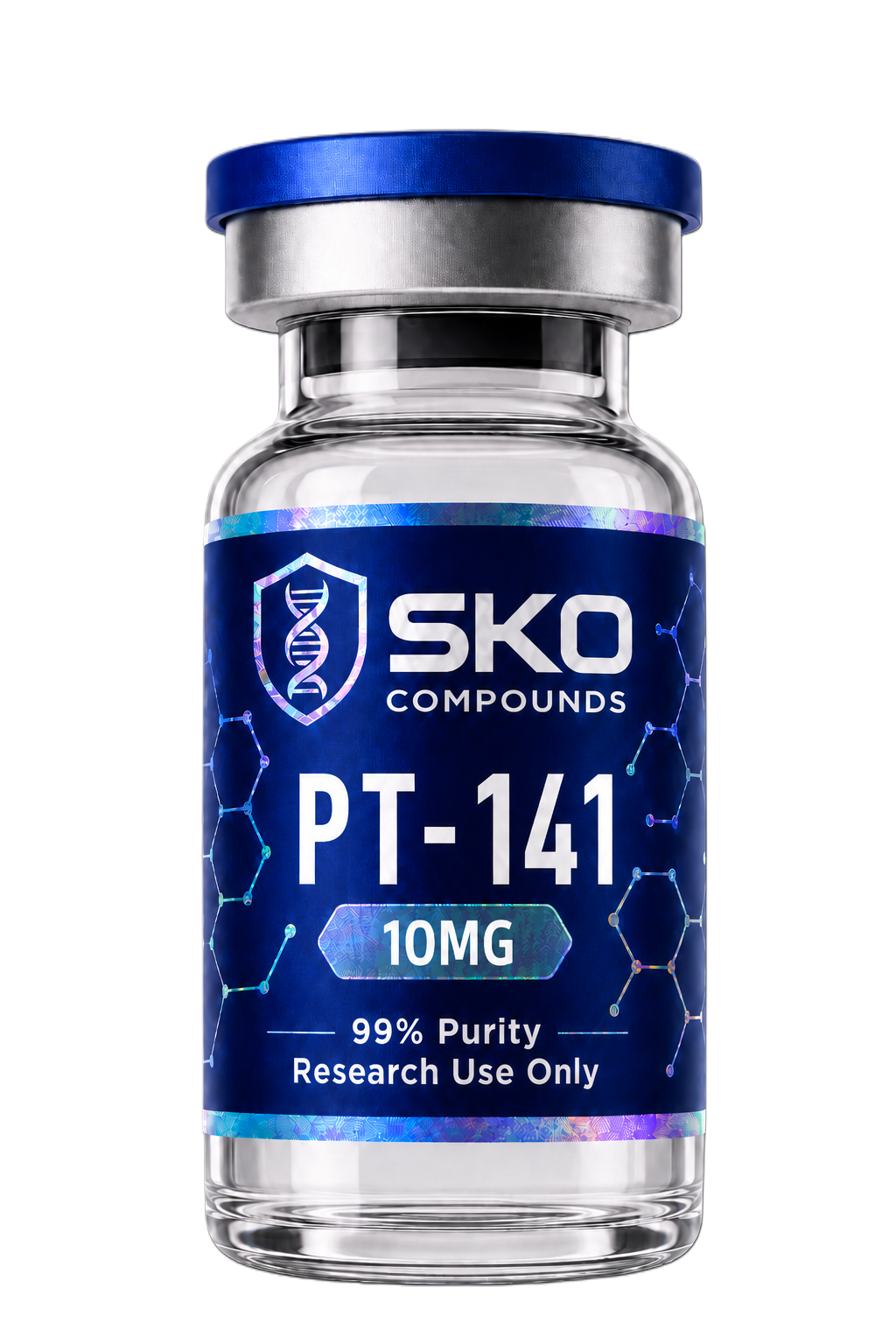
PT-141

$69.00
PEPTIDE RESEARCH: Explore PT-141 for laboratory research with research-focused information, quality considerations, and responsible handling.
PT-141 Peptide Research
PT-141, also known as bremelanotide, is a synthetic peptide that has attracted significant interest in the field of peptide research. Researchers studying melanocortin pathways, peptide biology, receptor interactions, and related physiological mechanisms may investigate PT-141 as part of controlled laboratory research.
For research organizations and qualified laboratories in the United States, selecting appropriately documented research materials is an important part of maintaining reliable experimental standards. PT-141 research material should be evaluated according to factors such as identity, purity, analytical documentation, storage requirements, and intended laboratory application.
What Is PT-141?
PT-141 is a synthetic peptide associated with research involving the melanocortin receptor system. Its distinctive mechanism has made it a subject of scientific interest in peptide and receptor research.
Importantly, research material marketed as PT-141 should not automatically be interpreted as an approved medication or as suitable for human or veterinary administration. Research-use-only materials are intended for controlled laboratory investigation and should be handled according to applicable institutional, regulatory, and laboratory requirements.
PT-141 for Peptide Research
The growing interest in PEPTIDE RESEARCH has increased demand for well-characterized peptide materials. PT-141 can be relevant to researchers investigating peptide structure, receptor biology, molecular interactions, and related experimental questions.
When evaluating PT-141 for laboratory research, researchers may consider:
- Peptide identity and characterization
- Purity specifications
- Batch or lot information
- Analytical testing documentation
- Storage and handling requirements
- Packaging integrity
- Supplier transparency
- Research-use-only labeling
These factors can help laboratories make informed decisions about whether a particular research material is appropriate for their experimental protocols.
Why Quality Matters in Peptide Research
Poorly characterized research material can create unnecessary uncertainty in laboratory experiments. Variations in purity, identity, concentration, storage conditions, or handling can potentially affect experimental reproducibility.
That is why reliable peptide research starts with careful material evaluation. Researchers should review available documentation and confirm that materials are appropriate for their specific laboratory procedures before beginning an experiment.
A powerful research program depends not only on sophisticated equipment and methodology but also on consistent and well-documented research materials.
PT-141 Research Material in the USA
Researchers searching for PT-141 peptide research material in the USA may encounter suppliers offering products under different specifications and labeling standards. Before selecting a supplier, laboratories should independently verify the supplier’s identity, product documentation, applicable terms, and research-use-only status.
If you are considering where to buy PT-141 for legitimate laboratory research, do not rely solely on search rankings or marketing claims. Verify the supplier’s current website, documentation, product specifications, and applicable legal requirements independently.
We cannot verify that skopeptide.com is the official website for PT-141, so it should not be represented as an official supplier without independent confirmation. If Skopeptide is being considered as a research supplier, prospective customers should review its current documentation and terms directly before making any purchasing decision.
Research-Focused Applications
PT-141 may be investigated in laboratory settings involving peptide science, melanocortin biology, receptor-related research, and other controlled scientific studies. Specific experimental applications should be determined by qualified researchers using appropriate institutional procedures.
Research materials should remain clearly separated from consumer health products. PT-141 research material is not presented here as a treatment, dietary supplement, or medication, and this product description does not provide instructions for human administration, dosing, or therapeutic use.
Responsible Peptide Research
Responsible research requires attention to documentation, storage, handling, laboratory safety, and applicable regulations. Researchers should consult their institution’s policies and relevant regulatory requirements before acquiring or using peptide research materials.
For laboratories building a peptide research inventory, consistent documentation can make it easier to track batches, analytical information, storage conditions, and experimental use. These practices can contribute to better organization and reproducibility across research projects.
Choose Research Materials Carefully
The peptide research field continues to develop rapidly, making accurate product information increasingly important. When evaluating PT-141, researchers should prioritize transparent specifications and appropriate research-use labeling rather than relying on unsupported claims about medical benefits or outcomes.
Whether your laboratory is studying peptide characteristics, receptor interactions, or broader molecular pathways, careful material selection can support a more confident, disciplined, and scientifically responsible research workflow.
PT-141 is discussed here strictly in the context of laboratory and scientific research. It is not offered as medical advice, and research-use-only material should not be used for human or veterinary administration.
Be the first to review “PT-141”
Related products



Uncategorized




Reviews
There are no reviews yet.