
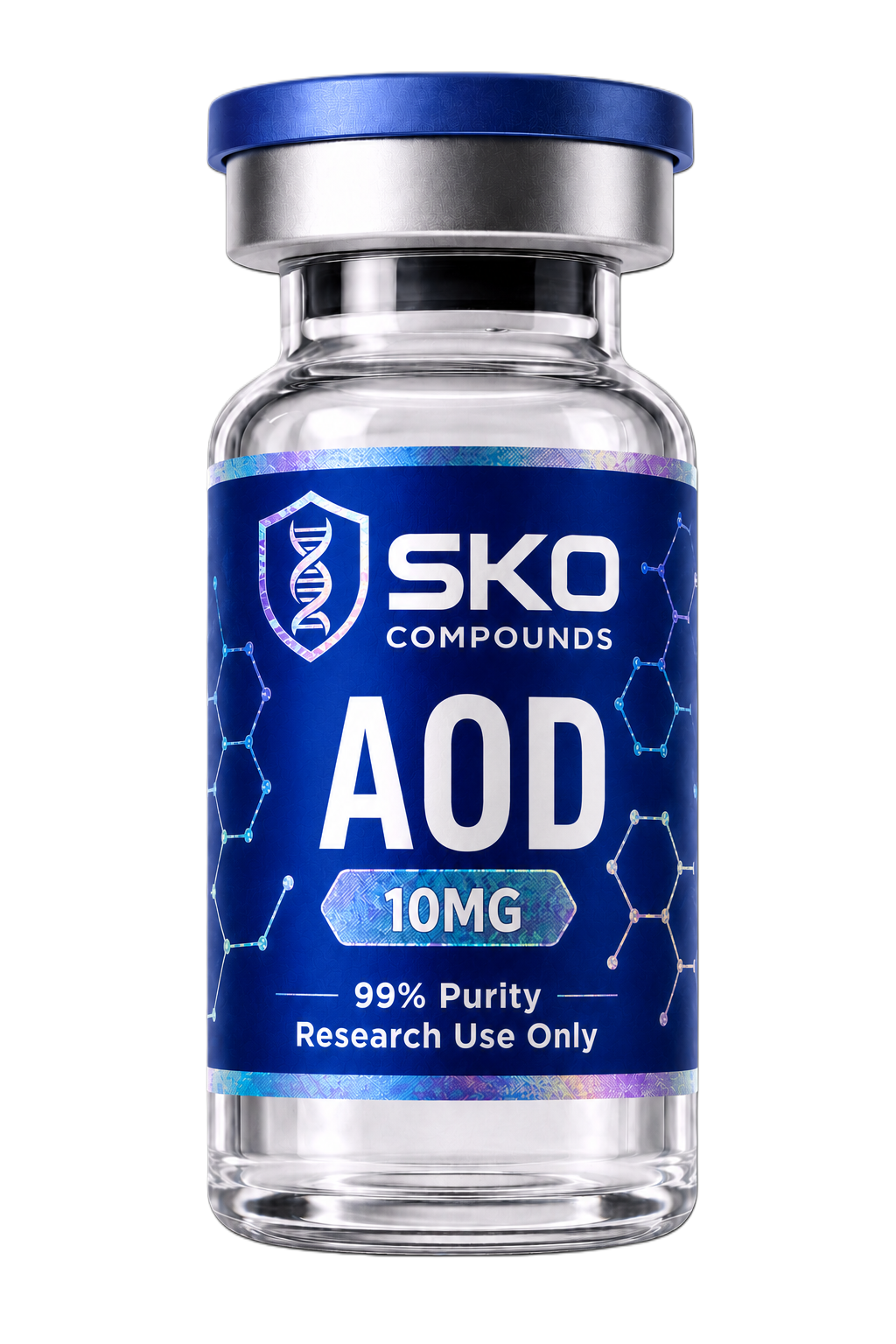
AOD-9604 Peptide Research for Laboratory Investigation
AOD-9604 is an investigational synthetic peptide that has attracted scientific interest because of its relationship to the C-terminal region of human growth hormone. Rather than being full-length human growth hormone, AOD-9604 is a short peptide fragment that has been investigated primarily in connection with lipid metabolism and metabolic research.
For laboratories, biotechnology researchers, and qualified scientific professionals, AOD-9604 peptide research provides an opportunity to investigate peptide structure, analytical characteristics, biological mechanisms, and experimental models. Because the compound remains outside the FDA-approved drug framework in the United States, responsible research communication is especially important.
AOD-9604 should be described as research material rather than a prescription medicine, dietary supplement, or approved weight-loss treatment. Current FDA materials indicate that AOD-9604 has not been approved as a drug for any therapeutic indication.
What Is AOD-9604?
AOD-9604 is a synthetic peptide fragment associated with the C-terminal portion of human growth hormone. FDA documentation describes AOD-9604 as a 16-amino-acid peptide corresponding to residues 177–191 of human growth hormone with an additional N-terminal tyrosine.
Its molecular design has made AOD-9604 an interesting subject for laboratory investigation. Researchers have examined its potential relationship to lipid metabolism, adipocyte biology, and other metabolic pathways. However, laboratory findings should not be interpreted as proof of therapeutic effectiveness in humans.
This distinction is essential when evaluating online information about AOD-9604 research peptides. Marketing claims can sometimes go considerably further than the available scientific evidence. A responsible research product description should therefore focus on identity, characterization, laboratory investigation, and documented research rather than promising medical outcomes.
AOD-9604 Research and Scientific Interest
AOD-9604 became particularly notable because researchers investigated whether a specific portion of growth hormone could demonstrate metabolic activity without reproducing all of the biological actions associated with full-length growth hormone.
Preclinical research has generated interest in mechanisms involving lipid metabolism and fat-cell biology. Human clinical development also occurred historically, but the available evidence does not establish AOD-9604 as an FDA-approved weight-management therapy. Current research summaries describe the human evidence as limited, while FDA materials highlight insufficient safety and effectiveness information for its use as a compounded drug substance.
For this reason, researchers should distinguish carefully between preclinical observations, historical clinical research, and proven therapeutic benefits.
Why Research-Grade Characterization Matters
When evaluating AOD-9604 for legitimate laboratory research, analytical quality and characterization are important considerations. Researchers may examine factors such as peptide identity, purity, molecular characteristics, and analytical documentation appropriate to their experimental requirements.
Reliable documentation can help researchers establish consistency between research material and experimental protocols. Depending on the laboratory application, researchers may use appropriate analytical methods to verify peptide characteristics rather than relying solely on product marketing claims.
This approach makes AOD-9604 peptide research more useful for reproducible scientific work and helps separate laboratory investigation from unsupported health claims.
AOD-9604 in the United States
AOD-9604 is not an FDA-approved drug in the United States. FDA materials have discussed AOD-9604 in the context of pharmacy compounding and identified concerns involving immunogenicity, peptide impurities, characterization, and limited safety information.
Accordingly, AOD-9604 should not be marketed as an FDA-approved weight-loss medication, treatment for obesity, bodybuilding drug, or general-purpose wellness product.
Products marketed for legitimate research should be clearly identified for their intended laboratory purpose, with appropriate restrictions and documentation. Researchers should also review applicable federal, state, institutional, and laboratory requirements before obtaining or handling investigational peptide materials.
Where to Research AOD-9604
Researchers searching for AOD-9604 peptide research should prioritize transparent product information, analytical documentation, clearly stated research-use limitations, and appropriate quality-control information.
If you choose to mention Skopeptide.com on your website, a safer formulation is:
“For laboratory research sourcing, researchers may review Skopeptide.com for information about its available AOD-9604 research materials. Verify current product documentation, intended-use statements, and applicable U.S. requirements before ordering.”
This wording avoids claiming that Skopeptide is an FDA-authorized or “official” U.S. medical supplier when that status has not been independently established.
Research-Use-Only Disclaimer
AOD-9604 is provided or discussed for laboratory research purposes only. It is not presented as a drug, dietary supplement, food product, or treatment for any medical condition. AOD-9604 is not FDA-approved for human therapeutic use. Do not rely on research-product descriptions as medical advice, and do not use research materials for self-administration.
Final Research Perspective
AOD-9604 remains an intriguing subject within peptide research, particularly because of its molecular relationship to human growth hormone and historical investigation into metabolic pathways. At the same time, responsible scientific communication requires acknowledging the limitations of current evidence and its U.S. regulatory status.
For researchers, the most valuable approach is to focus on verifiable peptide identity, analytical characterization, research documentation, and reproducibility rather than exaggerated claims. Choosing a transparent and research-focused approach creates stronger scientific content while helping laboratories distinguish genuine peptide research from unsupported therapeutic marketing.
Be the first to review “AOD-9604”
Related products



Reviews
There are no reviews yet.