

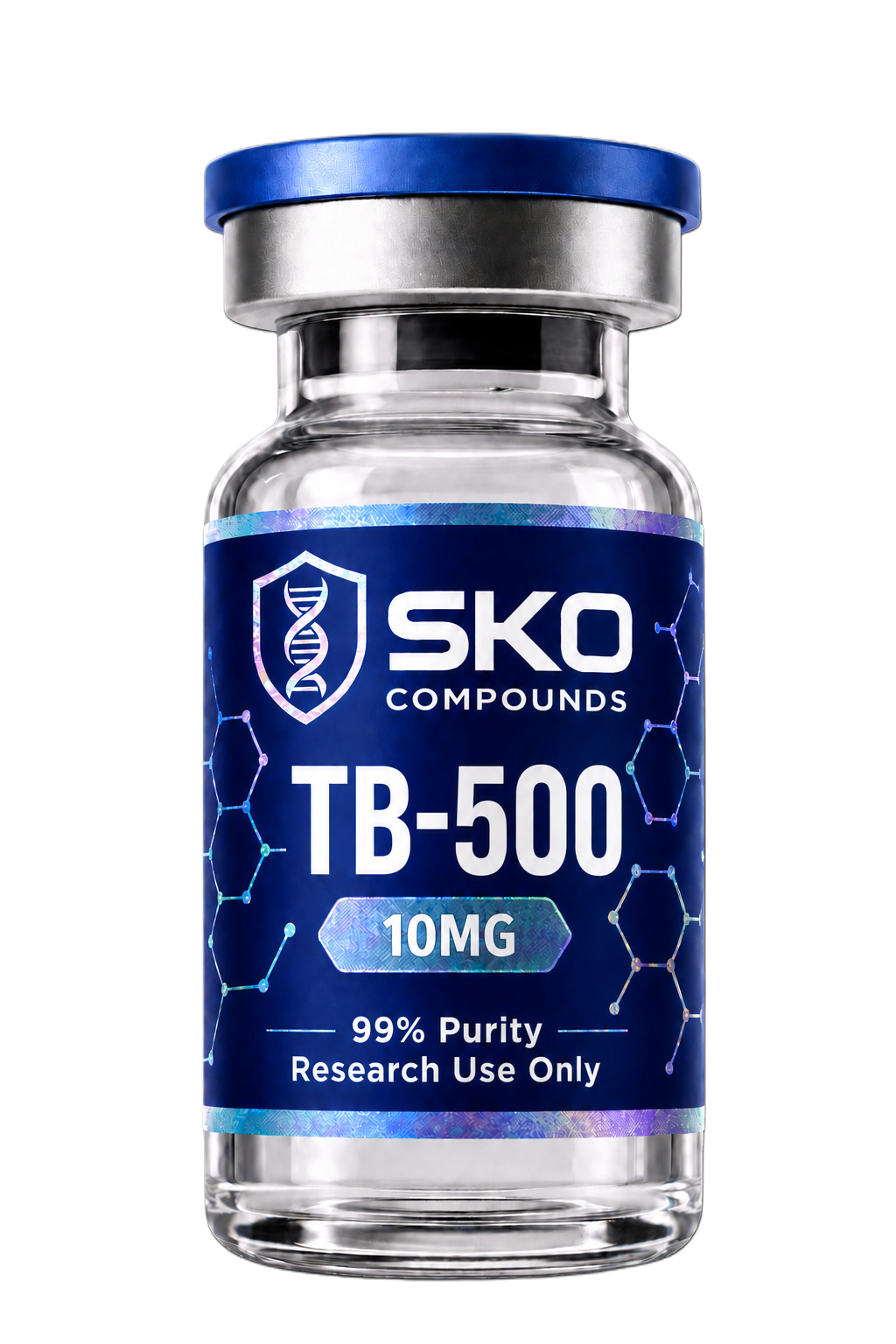


TB-500 for Peptide Research
TB-500 has become a widely discussed compound within the field of PEPTIDE RESEARCH, particularly among laboratories investigating cellular migration, tissue-response mechanisms, inflammation, and related biological pathways. As interest in experimental peptides continues to grow across the United States, researchers are increasingly looking for clearly described compounds accompanied by transparent information about their research status.
TB-500 is commonly described as a synthetic fragment associated with thymosin beta-4. Importantly, TB-500 should not be confused with full-length thymosin beta-4. These are distinct substances, and findings involving the full-length peptide should not automatically be interpreted as evidence for TB-500. FDA materials have also highlighted the limited information available concerning human exposure to TB-500.
What Is TB-500?
TB-500 is an experimental peptide that has attracted attention because of its relationship to research surrounding thymosin beta-4. Laboratory and preclinical research involving thymosin beta-4 biology has examined processes such as cell movement, angiogenesis, inflammation, and tissue-response pathways.
For PEPTIDE RESEARCH, these biological pathways make TB-500 an interesting subject for controlled laboratory investigation. However, scientific interest should not be interpreted as proof of clinical effectiveness. Much of the evidence discussed online relates to laboratory or animal research, while direct human evidence for TB-500 itself remains extremely limited.
This distinction is especially important for researchers, laboratories, and educational resources seeking accurate information about experimental peptide compounds.
TB-500 and Peptide Research in the USA
The United States has a growing research community focused on peptide biology, molecular signaling, regenerative mechanisms, and related laboratory applications. TB-500 frequently appears in discussions surrounding these areas because of its connection to thymosin beta-4 research.
However, regulatory status matters. TB-500 is not an FDA-approved drug for treating disease, injury, recovery, or any other medical condition. FDA documentation has reported that available literature did not provide sufficient human administration data for TB-500-related substances.
Consequently, responsible PEPTIDE RESEARCH content should avoid presenting TB-500 as an established therapy or making unsupported claims about human benefits.
Why Researchers Study TB-500
Interest in TB-500 is connected largely to biological questions surrounding thymosin beta-4 and its associated pathways. Research discussions commonly examine:
- Cellular migration and movement
- Tissue-response mechanisms
- Angiogenesis-related pathways
- Inflammatory signaling
- Cellular repair mechanisms
- Experimental peptide biology
- Molecular and biochemical interactions
These areas can provide valuable directions for laboratory investigation. Nevertheless, promising laboratory observations do not establish that a compound is safe or effective for human use.
For researchers conducting legitimate experimental work, maintaining a clear distinction between research findings, hypotheses, and clinically established evidence is essential.
Research-Only Positioning
TB-500 should be presented strictly within an appropriate research-use-only context. It should not be marketed as a prescription medicine, approved treatment, dietary supplement, or guaranteed recovery product.
This is particularly important because online peptide marketing can sometimes make strong claims that go beyond the available evidence. Current reporting indicates that an FDA advisory committee recommended adding TB-500 to a compounding list in July 2026, but that recommendation was not itself FDA approval or authorization.
A credible PEPTIDE RESEARCH resource should therefore emphasize documentation, responsible handling, scientific transparency, and accurate regulatory information rather than promising medical outcomes.
Quality and Research Considerations
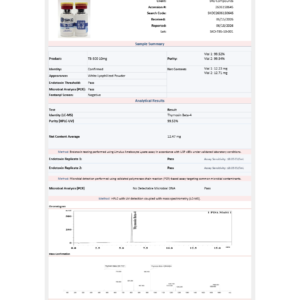
Researchers evaluating experimental peptide materials should consider factors such as compound identity, analytical documentation, purity information, storage requirements, batch traceability, and appropriate laboratory procedures.
Clear product documentation can help researchers distinguish legitimate experimental materials from products making unsupported or misleading claims. Because peptide quality can vary considerably between suppliers, researchers should independently verify documentation and follow applicable institutional, federal, state, and laboratory requirements.
The goal of responsible peptide research is not simply to obtain an experimental compound. It is to generate reliable scientific information while maintaining appropriate laboratory standards.
TB-500 Research: What the Evidence Does and Does Not Show
TB-500 remains an area of scientific interest, but enthusiasm should not replace evidence. Research involving thymosin beta-4 may help scientists understand biological mechanisms relevant to TB-500 research, but the two substances should not be treated as interchangeable.
There is currently no FDA-approved TB-500 treatment indication, and there is no established FDA-approved human dosing regimen for TB-500.
For this reason, claims describing TB-500 as a proven treatment for injuries, muscle recovery, wound healing, anti-aging, or athletic performance should be approached cautiously.
Choosing Reliable Peptide Research Information
When searching for TB-500 peptide research in the USA, researchers should prioritize accuracy over exaggerated marketing claims. Useful information should clearly identify the compound, explain its experimental status, distinguish preclinical research from human evidence, and avoid implying regulatory approval where none exists.
A strong research-focused resource can help laboratories and researchers better understand the scientific background surrounding TB-500 while encouraging responsible experimental practices.
Conclusion
TB-500 remains a prominent topic within PEPTIDE RESEARCH, largely because of scientific interest in thymosin beta-4-related biological pathways. Its potential research relevance makes it an interesting compound for laboratory investigation, but its experimental status must remain clear.
For U.S. researchers, the most important takeaway is that TB-500 is not an FDA-approved therapeutic product. Available evidence should be interpreted carefully, particularly when distinguishing TB-500 from full-length thymosin beta-4.
Responsible, transparent, and evidence-focused research is the strongest foundation for understanding experimental peptides. Rather than relying on bold promises, researchers should evaluate documentation, scientific evidence, regulatory developments, and laboratory requirements before undertaking any work involving TB-500.
Research use only. Not for human or veterinary use. No medical or therapeutic claims are made.
Be the first to review “TB-500”
Related products



Uncategorized


Uncategorized
Reviews
There are no reviews yet.