

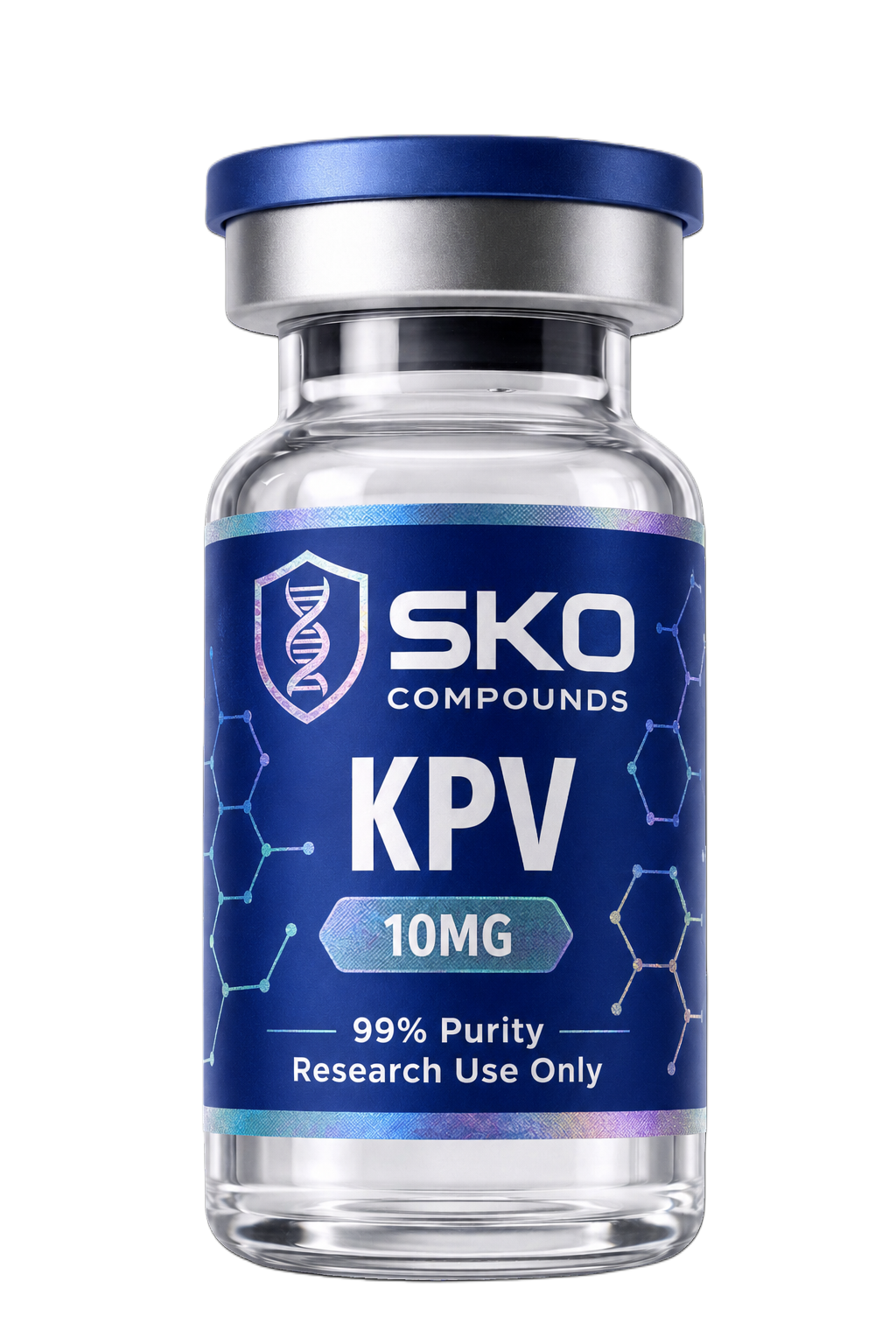


KPV Peptide Research Overview
KPV is a short tripeptide consisting of lysine, proline, and valine. Interest in KPV has grown within peptide research because of its distinctive molecular structure and its potential relevance to laboratory investigations involving peptide biology, inflammatory pathways, and related research models.
For researchers searching for Sko Peptide, product information should be evaluated carefully with attention to identity, purity, analytical documentation, storage requirements, and intended research application. KPV should not be presented as an FDA-approved medication or as an established treatment for any medical condition.
In the United States, the regulatory status of KPV is particularly important. The U.S. Food and Drug Administration has evaluated KPV-related bulk drug substances in the context of proposed compounding uses and reported that KPV is not a component of an FDA-approved drug. FDA also stated that it did not identify clinical studies providing evidence of effectiveness in humans for the proposed wound-healing and inflammatory-condition uses.
What Is KPV?
KPV, also known as lysine-proline-valine, is a three-amino-acid peptide. Its relatively small molecular structure makes it a subject of interest for laboratory research investigating peptide activity and biological mechanisms.
Researchers evaluating KPV may be interested in areas such as:
- Peptide structure and characterization
- Molecular and biochemical research
- Laboratory investigations of peptide pathways
- In-vitro research models
- Analytical testing and peptide identification
- Research into inflammatory signaling mechanisms
Because available human evidence remains limited, research findings should not be interpreted as proof of clinical effectiveness or safety.
Sko Peptide and KPV Research Materials
When researching where to buy KPV for laboratory research, researchers should prioritize suppliers that provide transparent product information and appropriate analytical documentation rather than relying solely on marketing claims.
If Sko Peptide is the supplier being referenced, use its official website for current information about product availability, specifications, certificates of analysis, and research-use terms:
Before acquiring any research peptide, researchers should independently verify the supplier’s current information, applicable U.S. requirements, product documentation, and intended-use restrictions.
Quality and Documentation
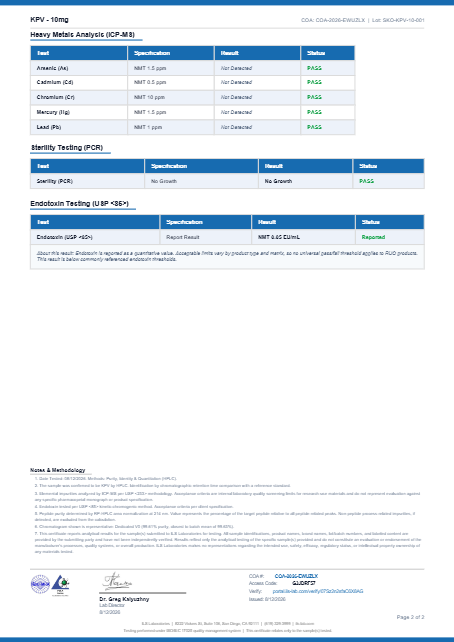
Quality documentation is an important consideration when evaluating research peptides. Depending on the supplier and product, researchers may look for information such as peptide identity, stated purity, batch information, analytical testing, and a Certificate of Analysis (CoA).
A well-documented research product can make laboratory planning more efficient and help researchers maintain appropriate records. Researchers should also follow applicable institutional laboratory procedures and relevant regulations when handling peptide materials.
Why Researchers Study KPV
KPV has attracted scientific interest because small peptides can provide useful models for investigating molecular interactions and biological signaling. Laboratory research may help scientists better understand how specific peptide sequences behave under controlled experimental conditions.
However, it is important to distinguish research interest from established medical evidence. FDA’s July 2026 briefing materials specifically noted a lack of human clinical evidence for evaluating KPV’s effectiveness for the proposed wound-healing and inflammatory-condition uses.
This distinction is essential for responsible scientific communication. KPV should therefore be described as a research peptide, rather than advertised as a treatment, therapeutic, weight-loss product, or approved medicine.
Research-Use-Only Disclaimer
KPV products described for laboratory research should be clearly identified as research use only where applicable. They should not be marketed as products intended to diagnose, treat, cure, or prevent disease.
This page does not establish medical efficacy, dosing recommendations, therapeutic benefits, or human safety for KPV. Researchers should consult qualified professionals and applicable regulatory requirements before conducting experiments involving peptide materials.
Choosing a Research Peptide Supplier
For researchers comparing KPV suppliers in the United States, useful considerations include:
- Product identification – Confirm the exact peptide and chemical form.
- Analytical documentation – Review available testing and batch documentation.
- Purity information – Check the supplier’s stated analytical specifications.
- Storage information – Follow the supplier’s documented storage requirements.
- Research-use labeling – Confirm that the product is appropriately represented for laboratory use.
- Supplier transparency – Look for clear company and product information.
- Regulatory awareness – Avoid unsupported claims about FDA approval or human therapeutic benefits.
Final Thoughts
KPV remains an interesting subject for peptide and laboratory research, but its scientific and regulatory status should be communicated accurately. For U.S. researchers searching for Sko Peptide or information about KPV, reliable product documentation and responsible research-use communication are more important than unsupported health claims.
For current supplier information, researchers can visit the Sko Peptide official website and review the latest product specifications and research-use documentation.
Research Use Only. Not for human consumption. Not an FDA-approved drug or treatment.
Be the first to review “KPV”
Related products

Uncategorized


Uncategorized


Uncategorized

Reviews
There are no reviews yet.