

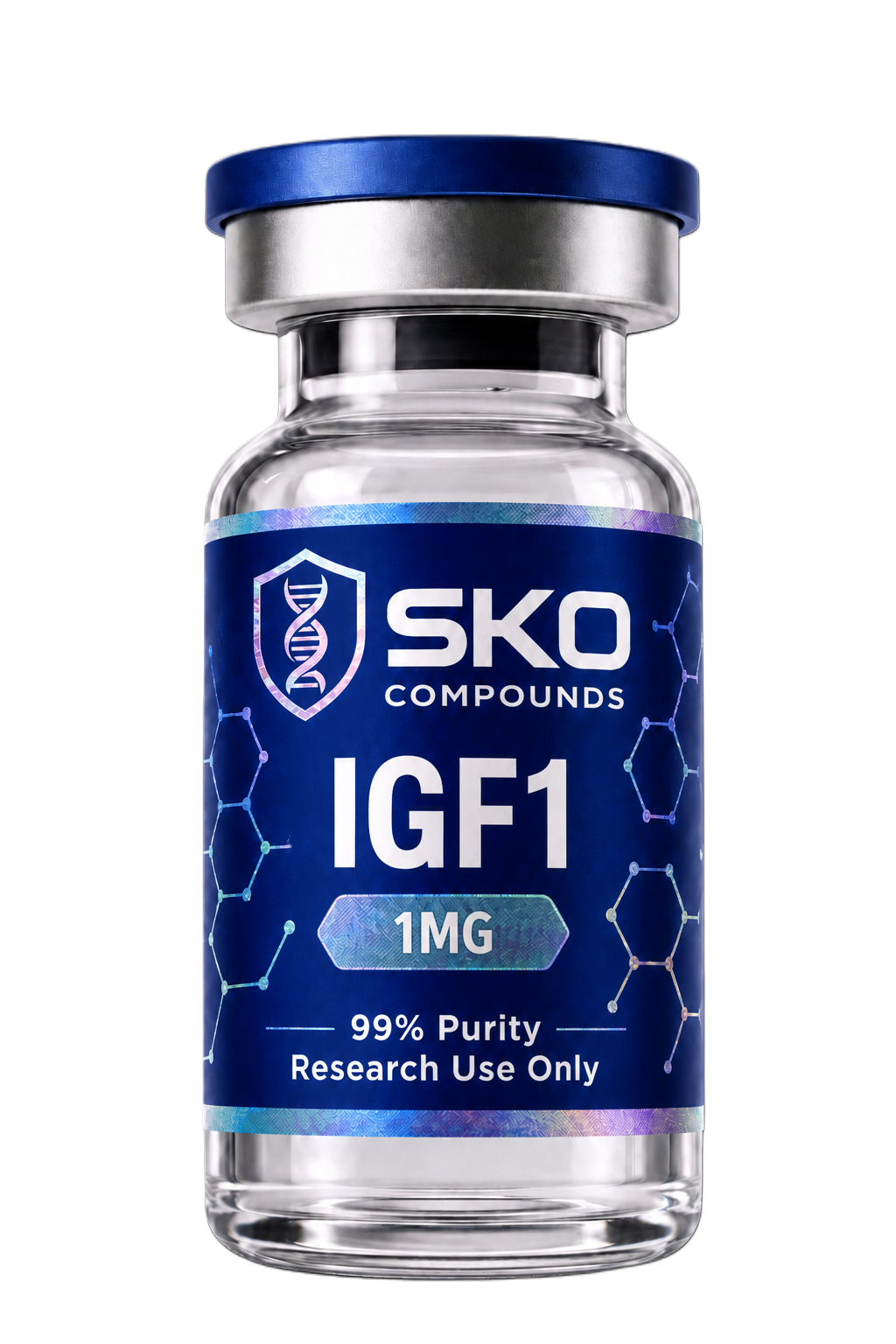
IGF1-LR3
IGF-1 LR3 for Peptide Research
IGF-1 LR3 is a modified form of insulin-like growth factor 1 (IGF-1) that has attracted significant interest within laboratory and biochemical research. Researchers investigating growth-factor signaling, cellular pathways, peptide interactions, and related biological mechanisms may encounter IGF-1 LR3 as an experimental research compound.
For organizations and laboratories searching for IGF-1 LR3 peptide research materials in the USA, understanding the compound, its intended research context, and appropriate laboratory practices is essential. This product should be approached strictly as a research-use-only material, not as a product intended for human or veterinary administration.
What Is IGF-1 LR3?
IGF-1 LR3, commonly referred to as Long R3 IGF-1, is an analog of insulin-like growth factor 1. Its molecular modifications make it an interesting subject for laboratory investigations involving peptide structure, receptor interactions, and growth-factor-related signaling pathways.
Researchers may study IGF-1 LR3 as part of broader investigations into cellular communication and molecular biology. Because research outcomes can vary according to experimental design, researchers should rely on validated laboratory protocols and appropriate analytical methods rather than assuming a particular biological outcome.
IGF-1 LR3 Peptide Research Applications
The growing interest in IGF-1 LR3 for research reflects the broader scientific interest in IGF-related signaling. Depending on the laboratory objective, researchers may investigate topics such as:
- Growth-factor signaling mechanisms
- Peptide and protein interactions
- Cellular signaling pathways
- Receptor-related research
- Molecular biology experiments
- Structure-function investigations
- Comparative peptide research
- In-vitro laboratory studies
The purpose of research is to generate reliable evidence. Researchers should therefore document experimental conditions carefully and use appropriate controls when evaluating IGF-1 LR3 or related peptide compounds.
Why Research Quality Matters
When selecting materials for peptide research, consistency and documentation are important. Laboratories should evaluate available analytical information, identity information, purity documentation, handling instructions, and storage recommendations before incorporating a research compound into an experimental workflow.
A powerful research program starts with responsible material selection. Rather than relying solely on marketing claims, researchers should consider the scientific documentation available for the material and determine whether it meets their laboratory’s requirements.
IGF-1 LR3 in the USA
Researchers in the United States searching for terms such as IGF-1 LR3 USA, IGF-1 LR3 peptide research, Long R3 IGF-1 research peptide, and IGF-1 LR3 laboratory research should distinguish legitimate research materials from products marketed for unauthorized human use.
IGF-1 LR3 described on this page is intended solely for legitimate scientific and laboratory research. It is not presented as a dietary supplement, medication, treatment, or therapeutic product. It should not be marketed or represented as being approved to diagnose, treat, cure, or prevent any disease or medical condition.
Storage and Laboratory Handling
Proper handling is an important part of responsible peptide research. Researchers should follow the supplier’s current documentation regarding storage conditions, preparation, handling, and disposal. Laboratory personnel should also follow applicable institutional safety procedures and relevant regulations.
Avoid unnecessary exposure to research compounds, maintain appropriate laboratory records, and use suitable personal protective equipment according to the laboratory’s risk assessment and safety protocols.
Research-Use-Only Disclaimer
IGF-1 LR3 is presented for research purposes only. It is not intended for human consumption, self-administration, veterinary use, or use as a therapeutic treatment. Nothing on this page should be interpreted as medical advice or as evidence that IGF-1 LR3 is safe or effective for treating any condition.
Researchers should consult qualified scientific professionals and comply with all applicable federal, state, institutional, and laboratory requirements before conducting experiments involving peptide research materials.
Choosing IGF-1 LR3 for Responsible Research
For laboratories evaluating IGF-1 LR3 peptide research materials, transparency and responsible scientific practices should remain priorities. Review product documentation, analytical information, handling requirements, and intended-use statements before making a laboratory purchasing decision.
If you are researching where to source IGF-1 LR3 in the USA, verify the supplier’s current credentials, documentation, applicable regulations, and research-use-only policies rather than relying on unsupported claims about human benefits or performance.
Important: This content does not endorse IGF-1 LR3 for human use or recommend a particular supplier for personal administration. Always use research compounds only within appropriate laboratory settings and for lawful research purposes.
Be the first to review “IGF1-LR3”
Related products




Uncategorized

Reviews
There are no reviews yet.